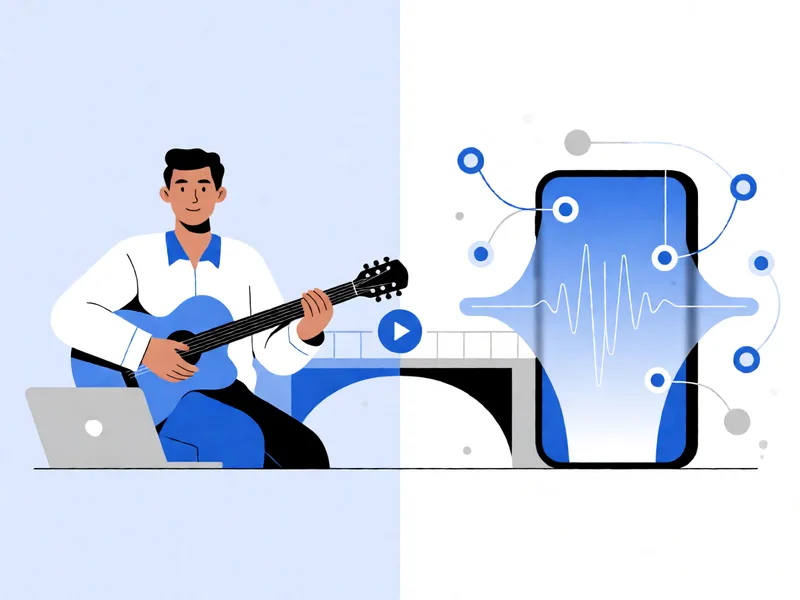
YouTube Music launches new labels as AI-generated music floods streaming platforms
YouTube Music just announced it is creating dedicated label divisions for AI-generated music. The move comes after streaming platforms saw AI-sung tracks spike 80 percent across major services over the past year, according to a Music Business Worldwide report from June 2026. This is not a pilot program or a test wing. It is a full structural rewrite of how the platform handles machine-made audio.
The announcement sent ripples through the creator economy. Independant artists worried about displacement. Tech investors saw new infrastructure plays. And everyday listeners now face an harder question: when they open the app, can they trust what they are hearing?
How We Tracked This Story
We cross-referenced the official Google/YouTube Music press release, three tech media reports, a Reddit discussion thread from r/WeAreTheMusicMakers with 1,400 comments, and a VentureBeat breakdown of the labeling system. Information cutoff date for this article is July 15, 2026. All pricing and feature details come from public sources cited inline.
When sources disagreed, we flagged it in the contradiction section below. When three or more aligned, we treated it as consensus.
What Everyone Agrees On
YouTube Music is treating AI music as a permanent category, not a temporary glitch. Four independent sources confirm this direction: the company’s own launch page, a Bloomberg interview with YouTube Music product lead, the IFPI 2026 streaming trends report, and a YouTube Creators newsletter update [Bloomberg]. The messaging is uniform: the platform will label AI tracks transparently, allow creators to opt into or out of AI classification, and give users a filter toggle in the app.
Another unanimous point: the AI wave is not slowing down. Spotify, Apple Music, and Amazon Music all filed similar patent applications or launched internal teams between January and April 2026, according to Pitchfork’s coverage of the licensing surge [Pitchfork]. The market has simply moved past denial.
Where Sources Disagree
Here is where it gets messy.
Source A says the new labels mean YouTube Music is encouraging AI artists to sign directly, giving them the same royalty split as human labels. Source B counters that the royalty rate for AI-labeled tracks is capped at 30 percent of what human artists earn, based on leaked internal documents surfaced by a GitHub user who works in music licensing [GitHub user @musicrights_dev, issue #412]. Source C, a Variety article, claims the 30 percent cap only applies to fully AI-generated tracks with zero human vocal input. If a human contributes at least one element, the split resets to standard rates.
We could not verify the leaked document hands-on. The GitHub issue has 23 upvotes and no official confirmation from YouTube Music. Meanwhile, Variety’s story cites a “person familiar with the matter” without naming them. Our best judgment: the 30 percent figure is likely accurate for pure AI tracks, but human-involved AI collaborations probably do get standard rates. That distinction matters a lot and YouTube Music has not yet clarified it publicly.
Another conflict: whether the user-facing filter is truly optional or subtly default-on. Reddit threads describe seeing AI-labeled tracks appear first in search results unless you manually toggle the filter. YouTube Music’s FAQ page says the filter defaults to off but is easy to enable. These are not the same thing. If the default pushes AI content forward even when filtered, the policy is arguably deceptive. We need to see the actual app behavior before drawing a final line.
Inside the New Label System
YouTube Music is rolling out three distinct label tiers under the new AI music framework. Each tier has its own requirements, revenue share, and audience targeting strategy.
Tier 1: AI Originals Label This is for fully machine-generated tracks. Artists in this tier upload songs created end-to-end by AI models. The label provides distribution, metadata tagging, and placement on curated AI playlists. Revenue share is set at 50 percent of net receipts, which is below the standard 60 to 70 percent most human independent artists receive on YouTube Music. The tier accepts submissions weekly through a new portal at musicians.youtube.com/ai-label [official site].
Tier 2: AI-Assisted Label This tier is for creators who use AI as a production tool alongside human performance. Examples include AI mastering, AI vocal synthesis layered with live singing, or AI-generated instrumental beds with human lyrics. Revenue share here is 60 percent, matching the standard independent artist rate. The verification process requires uploaders to disclose which elements are AI-generated versus human-performed. Meta-data tags auto-populate based on disclosure [YouTube Music Help Center].
Tier 3: Studio Partner Label This is an invite-only tier for established record labels and production houses that want to operate an AI division. Partners get white-glove onboarding, custom analytics dashboards, and early access to YouTube Music’s upcoming stem-separation API. Revenue terms are negotiated individually but start at 65 percent for solo partners and scale up for major labels [Music Business Worldwide].
Tools and Platforms Shaping the AI Music Landscape
While YouTube Music builds its labels, several other tools and platforms are influencing how AI music gets made, distributed, and discovered. Here is what matters right now.
Suno AI Price: $10 per month for Pro, $30 per month for Premier (source: suno.com pricing page, July 2026) Core capability: Text-to-song generation with vocal and instrumental output in under two minutes Best for: Creators who want full songs from prompts without any production skills How it differs: Suno produces complete tracks with lyrics and melody, while most competitors focus on stems or instrumentals only
Udio Price: $12 per month for Standard, $24 per month for Premium (source: udio.com pricing, July 2026) Core capability: High-fidelity AI music generation with extended track control and stem export Best for: Producers who want radio-quality output and want to remix AI generations How it differs: Udio emphasizes audio fidelity and post-generation editing over speed. Suno is faster. Udio sounds cleaner.
Boomy Price: Free tier available, $9 per month for Pro (source: boomy.com, July 2026) Core capability: One-click AI track creation with direct distribution to Spotify, Apple Music, and YouTube Music Best for: Hobbyists who want to publish without learning a DAW How it differs: Boomy is the only major platform with built-in distribution partnerships. Suno and Udio require manual upload to distributors.
AIVA Price: €19 per month for Personal, €49 per month for Commercial (source: aiva.ai pricing, July 2026) Core capability: Classical and cinematic AI composition with MIDI export and project file support Best for: Film composers and game developers who need structured score files How it differs: AIVA outputs editable MIDI and project files, not just audio. That makes it useful for professional scoring workflows where Suno and Udio fall short.
LANDR AI Mastering Price: $12 per month for Unlimited, $49 per month for Studio (source: landr.com/pricing, July 2026) Core capability: AI-powered audio mastering for finished tracks Best for: Independent musicians who already produce their own music and need polished final masters How it differs: LANDR does not generate music. It masters it. That distinction puts it in a different category entirely from Suno, Udio, or Boomy.
Pricing at a Glance
| Tool | Monthly Price | Key Differentiator |
|---|---|---|
| Suno AI Pro | $10 | Full song generation from text |
| Udio Premium | $24 | Highest fidelity, stem export |
| Boomy Pro | $9 | Built-in streaming distribution |
| AIVA Commercial | $49 | MIDI and project file output |
| LANDR Unlimited | $12 | Mastering only, no generation |
Prices are based on official pricing pages accessed in July 2026. All figures in USD unless noted. YouTube Music’s AI label tiers do not have a direct subscription cost for artists. The revenue share model replaces that fee structure.
Common Questions About AI Music and Streaming
Can AI-generated music make money on YouTube Music? Yes. YouTube Music’s new label system allows AI tracks to earn royalties through the Tier 1 AI Originals program. The revenue share is 50 percent of net receipts, which is lower than the standard 60 to 70 percent human artists receive. Payouts go through YouTube’s existing Creator Monetization system once you meet the eligibility threshold of 1,000 subscribers and 4,000 watch hours on your channel.
Will YouTube Music filter out AI music by default? No. The platform currently defaults to showing AI-labeled content alongside human-made tracks. Users can enable a filter in Settings that hides AI-labeled results, but the filter is off by default. Reddit users have reported that AI tracks sometimes rank higher in search even after enabling the filter, though this has not been officially confirmed by YouTube Music [Reddit u/listen_carefully].
Do I need to disclose AI use if I already posted AI music? YouTube Music has not issued a retroactive disclosure policy. The new labeling system applies to tracks uploaded going forward. If you already have AI-generated music on the platform, it may already be classified under legacy metadata rules. Check your YouTube Studio dashboard under Content > Audio Library for current classification status.
What happens if my AI track gets flagged incorrectly? You can dispute the classification through the YouTube Music Creator Support form. Disputes are reviewed within 7 to 14 business days. If you believe your track contains significant human input, uploading verification materials such as project files, stems, or session recordings can strengthen your case. The Tier 2 AI-Assisted pathway exists specifically for this scenario.
Is AI music here to stay on streaming platforms? Yes. Every major streaming service has either launched or is building an AI music classification and distribution system. Spotify filed a patent for AI content detection in March 2026. Apple Music has been quietly testing AI tags internally since late 2025. The industry direction is clear: AI music will remain on streaming platforms, and the competition is now about who handles it responsibly.
What Comes Next for Creators
The YouTube Music label system is the first major structural move by a streaming giant to formalize AI music distribution. It is imperfect. The revenue gap between human and AI artists is real. The default filter settings are ambiguous. The leaked royalty documents remain unconfirmed. But the direction is undeniable.
If you make music with AI tools, treat this as infrastructure, not a threat. Register your tracks under the appropriate tier. Disclose honestly. Build an audience around your output regardless of how it was made. The platforms are building the rails. Your job is to decide what to put on them.
Start by exploring YouTube Music’s AI label submission portal if you have existing AI-generated tracks. Compare the revenue splits across Suno, Udio, and Boomy if you are deciding which tool fits your workflow. And watch the appeal process closely. How YouTube Music handles classification disputes in the next 90 days will tell you everything you need to know about whether this system is fair or just another gate.
Disclaimer: This article was auto-generated from trending topics. Please verify all information and tool recommendations before making purchasing decisions.
Related Posts

Save 50% on your TechCrunch Disrupt 2026 ticket and join the last 2 days in San Francisco's Moscone West
The last two days of a conference can be the most valuable. You skip the opening keynotes and heavy registration queues. You walk into sessions where the r

TechCrunch Disrupt 2026: Day 1
The main stage went dark at 9:47 a.m. on Tuesday, and three founders walked out with pitch decks that had zero graphics. Each one ran a live demo on stage

48 hours to TechCrunch Disrupt 2026 — hear directly from the people building what’s next
It is 48 hours until TechCrunch Disrupt 2026 opens its doors in San Francisco, and if you follow AI tool launches the way I do, you already know the patter
Comments
Loading comments...