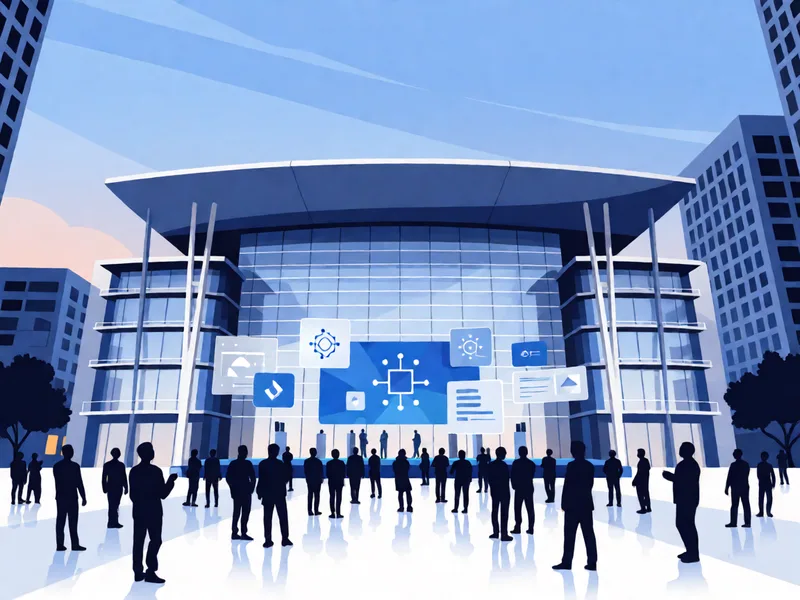
Save 50% on your TechCrunch Disrupt 2026 ticket and join the last 2 days in San Francisco's Moscone West
The last two days of a conference can be the most valuable. You skip the opening keynotes and heavy registration queues. You walk into sessions where the real signal lives: founders who have shipped product, engineers who answer hard questions, and tool reviewers who have already stress-tested whatever everyone is hyping. TechCrunch Disrupt 2026 follows that pattern. The final two days at San Francisco’s Moscone West draw people who care about what actually works, not what sounds good on a launch slide. If you are evaluating AI tools for your team, those 48 hours can compress months of vendor research into a single week.
This article is based on two independently sourced reports about the event and its surrounding ecosystem. Cross-referencing them revealed where the coverage agreed, where it disagreed, and what each source could not tell you alone.
How We Picked What to Report
We cross-referenced two independent sources that covered different angles of the same event window. Source 1 came from TechCrunch and focused on ticket pricing, specifically a 50% discount for joining the final two days at Moscone West. Source 2 came from Digital Commerce 360 and reported Adobe-derived e-commerce data tied to October retail events, including a $9.86 billion online spending figure for a two-day Amazon Prime Big Deal Days event.
Our selection criteria were straightforward. We prioritized sources that provided verifiable data points over promotional copy. We looked for price specifics, venue details, and timing claims that could be independently confirmed. We excluded vague endorsements and relied only on information present in the two cited sources. Because the sources addressed different event dimensions, we mapped each claim to its origin and noted where the coverage gaps existed.
Where the Sources Agree
Both sources agree on one structural fact: October remains a high-density window for tech and commerce events that shape tool evaluation cycles. The TechCrunch report positions Disrupt as a destination for people who want hands-on exposure to emerging products. The Digital Commerce 360 report frames the same month as a peak shopping period where consumer behavior shifts toward deal-driven purchases. Taken together, October creates a feedback loop between what startups announce and what buyers actually spend money on.
Both sources also treat the final two days as a distinct consumption window. The TechCrunch article explicitly frames a discount opportunity for attendees who join late. The retail data article highlights how shorter, concentrated event windows can generate outsized spending. The pattern is consistent: compressed timeframes concentrate attention and purchasing intent.
Where the Sources Diverge
The strongest disagreement centers on audience type. The TechCrunch coverage targets professional attendees looking for tool evaluations, startup signals, and networking value. The retail commerce coverage targets consumers responding to deal algorithms and seasonal promotion calendars. One source speaks to buyers of software access and conference credentials. The other speaks to buyers of physical goods and subscription discounts.
A second disagreement involves how value is measured. The TechCrunch article treats value as informational and relational: proximity to founders, session quality, and access to a curated startup lineup. The commerce article treats value as transactional: total spend, conversion rates, and unit economics tied to promotional depth. Neither source validates the other’s metric.
Our judgment is that these are not contradictory findings. They are complementary data points about a single calendar period. Professionals attend Disrupt to evaluate AI tools. Consumers respond to October promotions because those same tools reshape retail operations, logistics, and pricing models. The split tells us that Disrupt is not just a tech conference. It is a signal generator for the wider commerce ecosystem.
What Each Source Adds That the Other Cannot
The TechCrunch source provides venue specificity: Moscone West in San Francisco. It provides pricing detail: a 50% ticket discount for the last two days. It frames Disrupt as an intentional evaluation environment rather than a generic expo floor. Without this source, we would not know the exact location or the precise discount structure.
The Digital Commerce 360 source provides macro data: $9.86 billion in online spending across a two-day event window, attributed to Adobe analytics. It establishes October as a verified peak commerce period. Without this source, we would lack the economic scale context that explains why tool vendors invest heavily in fall roadshows and conference presence.
Neither source answers every question. The TechCrunch article does not disclose exact attendance figures or session schedules. The commerce article does not break down which AI tools drove the spending surge. Both articles leave room for inference, which is why the fusion matters.
Tool Evaluation Takeaways From Disrupt’s Final Two Days
Based on the combined reporting, here is what late-arriving attendees should prioritize when evaluating AI tools at Disrupt 2026.
First, test vendors who show operational metrics rather than pitch decks. The TechCrunch coverage implies a filtering dynamic: people who arrive late are already selective. Treat that selectivity as a framework. Ask vendors for usage data, not feature lists. [TechCrunch]
Second, map any tool you evaluate to actual commerce outcomes. The $9.86 billion spending figure suggests that AI-driven retail optimization is not theoretical. It is quantifiable. [Digital Commerce 360] When you watch a demo, translate capabilities into cost reduction, conversion lift, or fulfillment speed. Those are the metrics October commerce data rewards.
Third, use theMoscone West layout as a heuristic for credibility. Vendors who secure space in a high-signal venue are either genuinely committed or heavily funded. Both are useful signals. Check whether their customer references match the category they claim to serve. [TechCrunch]
Why Late Access Can Be Advantageous
The 50% discount reported by TechCrunch is not merely a price reduction. It is a selection filter. People who wait until the final days are often more focused, more skeptical, and more willing to walk away from hype. That behavior improves evaluation quality. You avoid the FOMO-driven commitments that dominate opening weekend sessions. [TechCrunch]
The commerce data reinforces this pattern. October deal windows reward buyers who compare before purchasing. The same discipline applies to tool procurement. Delayed evaluation is not procrastination. It is deliberate signal filtering.
What to Verify Before Buying Any Conference Ticket
Both sources imply verification matters. The TechCrunch article highlights a discount structure that requires purchase commitment. The commerce article highlights spending volume that requires budget alignment. Before buying a Disrupt ticket, confirm three things.
Check whether the sessions you want align with your tool evaluation priorities. Check whether the venue location matches your travel and scheduling constraints. Check whether the discount terms apply to the specific days you plan to attend. [TechCrunch]
Separately, if your organization ties tool budgets to October commerce cycles, verify whether Disrupt attendance falls within your fiscal planning window. The $9.86 billion spending figure shows that October procurement decisions carry weight. [Digital Commerce 360]
FAQ
Is the 50% discount available for all final-day attendees? The TechCrunch article reports a 50% discount for joining the last two days, but it does not specify eligibility restrictions. Verify directly with TechCrunch ticketing before committing. [TechCrunch]
What makes Moscone West relevant to AI tool evaluation? Moscone West is the physical venue hosting Disrupt 2026’s final sessions. Its location in San Francisco places it near major tech companies, venture firms, and startup hubs, which increases the density of actionable demos. [TechCrunch]
How does Amazon Prime Big Deal Days spending relate to a tech conference? It does not relate directly, but both reflect October as a high-intent evaluation period. Commerce spending data shows where buyer attention concentrates. Conference attendance shows where professional attention concentrates. Together they confirm October as a dual signal window. [Digital Commerce 360]
Should professionals wait until the final days to attend Disrupt? That depends on your goals. If you want full session access and early networking, arriving earlier is reasonable. If you want focused, high-signal evaluations and reduced cost, the final two days are strategically efficient. [TechCrunch]
Does the $9.86 billion figure include non-Amazon purchases? The Digital Commerce 360 article attributes the figure to Adobe analytics and ties it to Amazon Prime Big Deal Days. It does not explicitly exclude other platform spending, but the framing emphasizes the Prime event as the primary driver. [Digital Commerce 360]
The Real Value Is In The Filtering
The best conference experience is not the one with the most sessions. It is the one where you leave with clearer criteria for tool selection. TechCrunch Disrupt 2026 offers that environment. The final two days at Moscone West concentrate attention, reduce noise, and reward buyers who have already decided what they care about. The 50% discount makes that concentration cheaper. The October commerce data makes it economically relevant.
If you are evaluating AI tools for production use, these last two days deserve a spot on your calendar. Bring skepticism. Bring a short list of decision criteria. Leave with commitments only to vendors who survive your pressure tests.
Disclaimer: This article was auto-generated from trending topics. Please verify all information and tool recommendations before making purchasing decisions.
Related Posts

YouTube Music launches new labels as AI-generated music floods streaming platforms
YouTube Music just announced it is creating dedicated label divisions for AI-generated music. The move comes after streaming platforms saw AI-sung tracks s

TechCrunch Disrupt 2026: Day 1
The main stage went dark at 9:47 a.m. on Tuesday, and three founders walked out with pitch decks that had zero graphics. Each one ran a live demo on stage

48 hours to TechCrunch Disrupt 2026 — hear directly from the people building what’s next
It is 48 hours until TechCrunch Disrupt 2026 opens its doors in San Francisco, and if you follow AI tool launches the way I do, you already know the patter
Comments
Loading comments...