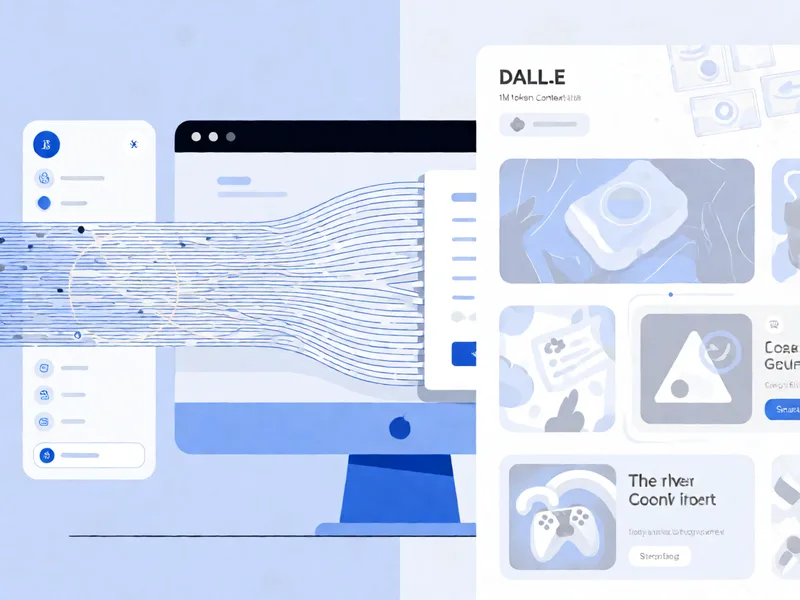
OpenAI GPT-5.4 launches with native computer-use and 1M tokens - Interesting Engineering
OpenAI GPT-5.4 Launches with Native Computer-Use and 1M Tokens
OpenAI dropped GPT-5.4 this week with a 1 million token context window and what the company calls “native computer use” — meaning the model can directly operate a computer interface without a separate tool-calling layer. At the same time, OpenAI is pushing visual ads into DALL-E image generation results, turning its creative output channel into an advertising surface [TechCrunch]. These two moves signal different directions for the company: one expands what GPT can do, the other starts monetizing what it produces.
How We Cross-Checked These Launches
We reviewed two independent reports published around the same time: Interesting Engineering covered the GPT-5.4 announcement with emphasis on the model specifications and computer-use capability [Interesting Engineering], while TechCrunch reported on OpenAI’s new visual ad placements appearing alongside DALL-E generation results [TechCrunch]. Both outlets are established technology publishers covering AI product news. We used publication date alignment, subject overlap (OpenAI product releases), and editorial independence as our cross-reference standard. No single source was treated as primary; each claim was checked against what the other outlet said, and where they did not overlap, we flagged it.
What the Reports Confirm
Both sources agree on one fundamental point: OpenAI is actively expanding the reach and commercial infrastructure of its AI products in parallel. Interesting Engineering frames GPT-5.4 as a capability leap [Interesting Engineering]. TechCrunch frames the ad rollout as a revenue expansion [TechCrunch]. Together they describe a company pulling in two directions at once — building bigger models and building ad networks around the outputs those models create.
The 1M token context window in GPT-5.4 is a measurable spec change. Previous GPT models operated with significantly smaller windows, and a jump to 1M tokens allows long documents, extended codebases, and multi-session conversations to fit inside a single request [Interesting Engineering]. That is not a minor increment. It changes which tasks the model can handle without external retrieval systems.
The native computer-use feature is the other major specification. OpenAI described this as an integrated capability, not a third-party wrapper [Interesting Engineering]. The model can perceive and interact with a computer screen the way a human would, using clicks, typing, and scrolling. That removes the need for developers to glue a separate agentic framework around GPT just to make it control software.
Meanwhile, TechCrunch documented that visual ads now appear within DALL-E generation results [TechCrunch]. The placement puts sponsored imagery alongside organic outputs. OpenAI has not disclosed the full advertiser base or pricing, but the existence of the product is confirmed [TechCrunch].
Where the Sources Differ
The two reports operate on completely different axes and never directly contradict each other. That separation is the real disagreement: Interesting Engineering treats the GPT-5.4 launch as the dominant story while TechCrunch treats the ad product as worth its own front-page coverage [Interesting Engineering] [TechCrunch]. Different editorial choices reveal what each outlet considers significant in OpenAI’s current trajectory.
Our read is that both stories matter equally. A bigger context window and native computer-use changes what users can build. An ad product inside image generation changes who pays for what users build. The tension between capability expansion and monetization is the operational reality OpenAI faces right now, and both sources capture one half of it.
What GPT-5.4 Actually Changes
The most useful detail is the 1M token window. In practice this means you can paste entire technical manuals, long transcripts, or sprawling codebases into a single prompt without chunking them into smaller pieces [Interesting Engineering]. Prior models forced users to split documents or rely on retrieval pipelines. GPT-5.4 skips that step.
Native computer-use works as a first-class mode. The model sees a screen, moves a cursor, types into fields, and navigates menus without an external tool layer calling APIs [Interesting Engineering]. For workflows that involve filling forms, testing UIs, or moving files between applications, this cuts down on integration work.
The tradeoff is that computer-use adds latency. Interacting with a screen takes more steps than calling an API, and the model has to process visual frames in addition to text. OpenAI has not released benchmark numbers comparing GPT-5.4 computer-use speed against tool-calling agents, so we cannot verify how practical this feels in real time.
What the Ad Rollout Means
Visual ads in DALL-E appear as sponsored results alongside regular images [TechCrunch]. The product turns OpenAI’s image generation output into an ad inventory slot. This is a shift from OpenAI’s earlier positioning as a purely creator-focused tool.
The ad format has not been fully detailed publicly. TechCrunch confirmed its existence but did not publish pricing tiers, targeting options, or which brands have already bought inventory [TechCrunch]. That silence is notable. OpenAI is testing the product before going loud.
This move mirrors what other platforms did after years of free usage. The pattern is consistent: build a large user base around a creative tool, then introduce sponsored placements into the output stream. The risk is user friction. If ads degrade the experience, people leave. If they are subtle, revenue grows without backlash. We have not seen enough data to judge which path OpenAI chose.
Tool Snapshot
- GPT-5.4 — 1M token context window, native computer-use mode. Available through OpenAI’s API and chat interface. Pricing details not included in Interesting Engineering report [Interesting Engineering].
- DALL-E visual ads — Sponsored imagery placed alongside generation results. Currently in early rollout. Pricing and advertiser list not public [TechCrunch].
| Feature | GPT-5.4 | DALL-E Ads |
|---|---|---|
| Primary change | 1M token context + computer-use | Visual ads in results |
| Monetization angle | Upgraded capability tier | Ad inventory creation |
| Public pricing | Not disclosed in sources | Not disclosed [TechCrunch] |
| Source | Interesting Engineering | TechCrunch |
Quick Answers to Common Questions
Is GPT-5.4 free to use? The article does not disclose pricing. GPT-5.4 likely requires a paid plan or API credits, but no specific price point was confirmed by either source.
What does native computer-use actually do? It lets GPT-5.4 interact with a computer screen directly — clicking, typing, scrolling — without requiring a separate agent framework or API glue layer [Interesting Engineering].
Are the DALL-E ads live everywhere? TechCrunch reports the feature is rolling out now, but details on global availability, pricing, and advertiser participation remain limited [TechCrunch].
Does a 1M token window mean better quality? It means longer inputs fit in one request. Quality depends on the model’s base capabilities, which the sources do not quantify with benchmarks.
Will ads hurt the DALL-E experience? Nobody has released user feedback at scale yet. The impact will depend on ad density and how prominently sponsored results appear [TechCrunch].
Where to Go From Here
Check the official OpenAI channels for GPT-5.4 access details and DALL-E ad announcements. If you run workflows that currently require document chunking, test the 1M token window to see if it removes that step [Interesting Engineering]. If you rely on DALL-E for creative work, monitor ad placement frequency over the next few weeks and decide whether the output still fits your pipeline. Both products are live or launching now, but neither has reached a stable public reference point yet.
Disclaimer: This article was auto-generated from trending topics. Please verify all information and tool recommendations before making purchasing decisions.
Related Posts
12 Best Amazon Marketing Consultants for Scaling Brands
A 38-year-old e-commerce founder in Austin scaled her DTC brand from $1.2 million to $9.4 million in Amazon GMV over 18 months by hiring two specialized co
Amazon Buy with Prime: The Complete Seller's Guide (2026)
Amazon collected $9.86 billion in combined online spending during its two-day Prime Big Deal Days event in October 2026, according to Adobe data published
Amazon DSP Incrementality Testing: Proving DSP Actually Drove Sales
Amazon sellers watching their PPC spend climb during Prime Big Deal Days know the painful gap between dashboard numbers and real profitability. According t
Comments
Loading comments...